How Sci-Tech Finance Can Fuel Innovation: Key Insights from the Shanghai Forum
On December 23, the 2024 Forum on the Coordinated Development of Science, Technology, and Finance was successfully held at the Shanghai University of Finance and Economics (SUFE). The event brought together top-tier academics and industry leaders from China Construction Bank (CCB), Bosera Funds, and Agree Software to discuss how financial ecosystems can better support “new quality productive forces.”
Breaking Through Bottlenecks in Sci-Tech Finance
Liu Xiaoguang, Wu Yuzhang Chair Professor at Renmin University, emphasized that sci-tech finance is a strategic imperative that dictates the future prosperity of the financial sector. He noted a significant shift from “financial skepticism” to a mission-driven era where finance is recognized as the indispensable engine of technological progress.
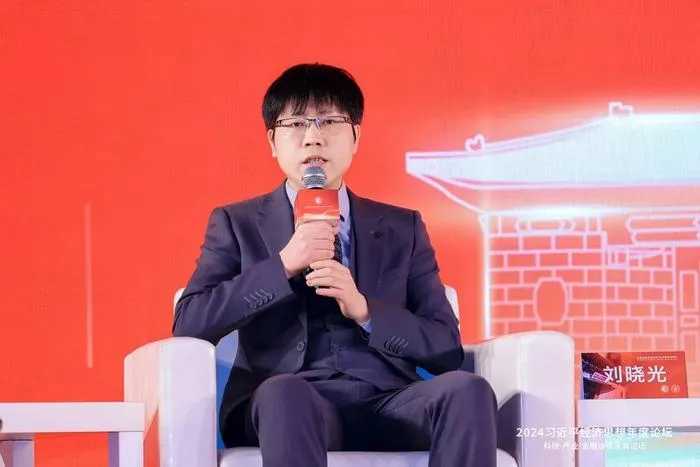 Figure 1: Professor Liu Xiaoguang, Wu Yuzhang Chair Professor at Renmin University of China and Director of the China Government Debt Research Center, delivering a speech.
From a tactical perspective, Liu stressed the need to respect the unique “laws of innovation.” When dealing with disruptive technologies, banks must overcome information asymmetry and establish robust risk-sharing mechanisms. He argued that the current system needs a substantial influx of Venture Capital (VC) and Private Equity (PE) players who directly interface with tech startups.
“Banks should adopt a ‘follow-and-observe’ strategy: intervene early with modest capital, and once the technology reaches maturity, rapidly scale up funding to drive industrialization and commercialization,” Liu suggested. He also recommended that banks establish internal “firewalls”—specialized units operating like VC firms—to explore high-risk opportunities without compromising the stability of core banking operations.
Zhu Xiaoneng, Dean of the School of Finance at SUFE, identified five critical challenges:
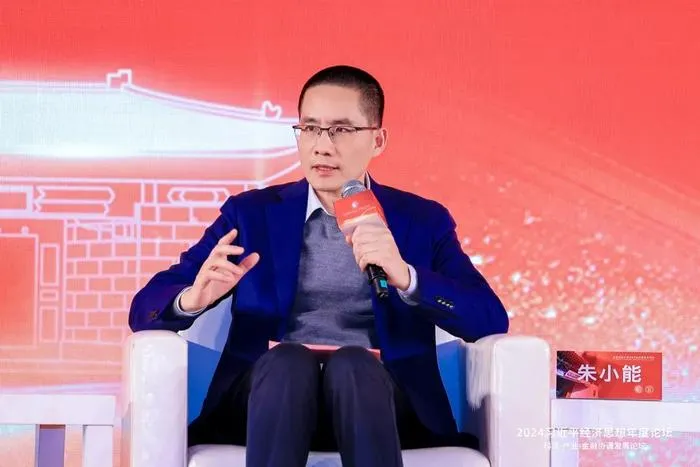 Figure 2:Professor Zhu Xiaoneng, Director of the Academic Affairs Office and Dean of the School of Finance at SUFE, delivering a speech.
1.Supply Shortages: A lack of high-risk tolerance and an underdeveloped credit guarantee system. 2.Structural Mismatch: The need for dynamic adjustment between debt and equity financing ratios as companies move through different growth stages. 3.Financing Inefficiencies: The requirement for a more balanced financing architecture. 4.Capital Gaps: A shortage of investors willing to hold the high-risk bonds often issued by tech firms. 5.Policy Boundaries: The delicate balance between a “proactive government” and an “efficient market.”
Optimizing Services for the “0 to 10” Journey
Dong Xuanzhong, GM of the Sci-Tech Industrial Finance Department at CCB (Shanghai Branch), introduced a framework focusing on the “0 to 10” development phase. He distinguished “Sci-Tech Finance” (the early 0-10 stage) from “Industrial Finance” (the mature 10-100 stage).
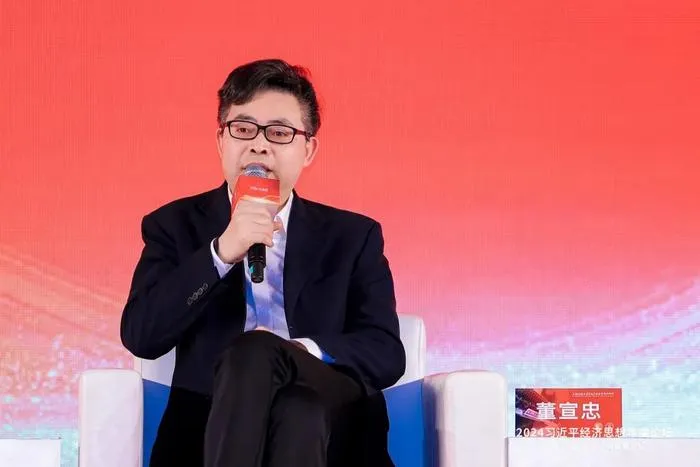 Figure 3: Dong Xuanzhong, General Manager of the Sci-Tech Industrial Finance Department at China Construction Bank (Shanghai Branch), delivering a speech.
“The current market lacks patient capital,” Dong noted, “and this shortage is most acute in the early innovation stages.” To address this, CCB offers two distinct paths:
- For Incremental Innovation: Diversified, “relay-style” integrated financial products.
- For Disruptive Innovation: Utilizing the bank’s ecosystem to match startups with Private Banking clients—investors who can provide stable, long-term, and “non-return-oriented” support.
From an IT and systems perspective, Pu Yun, CTO of Agree Software, outlined four dimensions for integration:
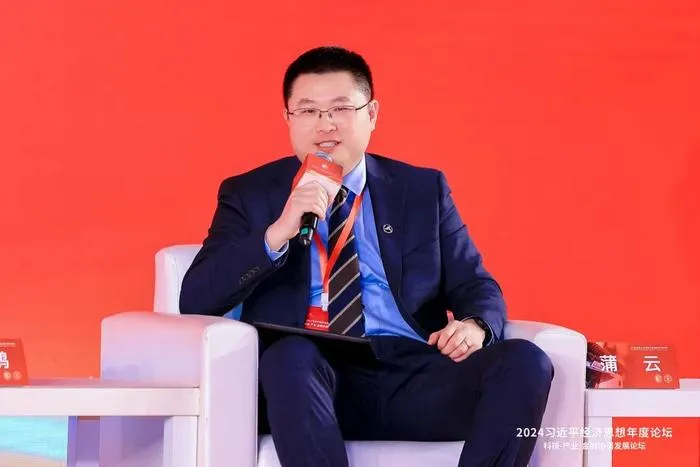 Figure 4:Pu Yun, CTO of Agree Tech, delivering his keynote speech.
- Industrial Embedding: Integrating banking services directly into corporate operational systems to better track fund usage and manage risk
- Service Orchestration: Moving from isolated service points to a systematic, “relay-style” architecture that supports a firm over its entire lifespan.
- Governance & Efficiency: Utilizing a “Middle-office Platform” to unify channels, products, and partners, allowing for the rapid rollout of new financial tools.
- Frontier Tech: Using IoT and AI to ensure funds are earmarked for specific equipment, preventing capital idle waste.
The 2025 Outlook: A “Double Expansion”
Zeng Peng, Chief Investment Officer at Bosera Funds, remains bullish on the 2025 investment landscape. He pointed to a clear policy shift toward a “moderately loose” monetary policy and a “more proactive” fiscal policy—the first such combination in 14 years.
“In our framework, this ‘dual expansion’ leads to a simultaneous improvement in liquidity and fundamentals,” Zeng explained. “Tech stocks are poised to lead the market, potentially achieving a ‘twin rebound’ in both earnings and valuations.”
He advised investors to focus on the “Double Lows”:
- Low Penetration Rates of new technologies (indicating high growth potential).
- Low Localization Rates (suggesting massive opportunities for domestic substitution).
The Ethics of AI in Finance
As Artificial Intelligence becomes ubiquitous in finance, the forum participants urged a balanced approach. Liu Xiaoguang advocated for a unified global risk standard. Zhu Xiaoneng called for “Human-Centric Finance,” using AI to empower regulators and innovators alike. Dong Xuanzhong reminded the audience that banks must navigate the ethical challenges of AI while strictly protecting consumer rights, while Pu Yun emphasized that human oversight in code auditing remains a non-negotiable safety net.